oDD BIRD REVIEWS
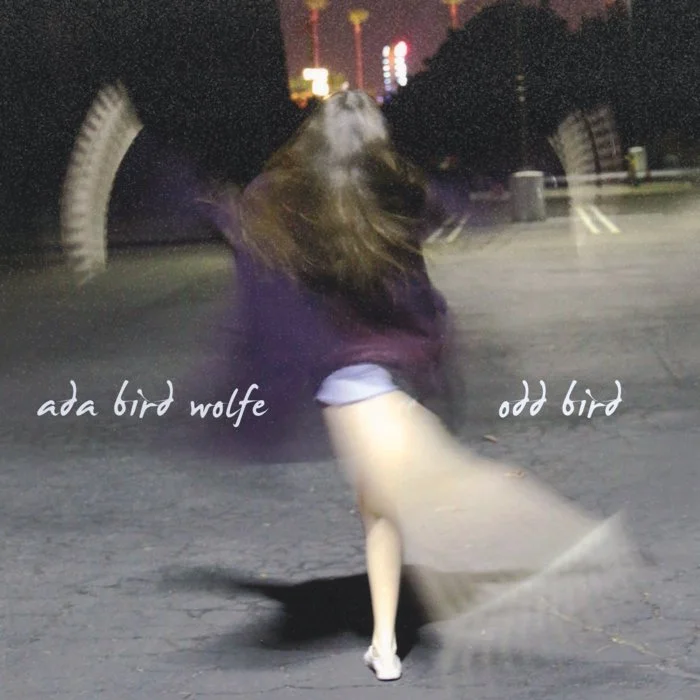
Ada Bird Wolfe: Odd Bird
By Paul Freeman | Pop Culture Classics
With her third album, "Odd Bird," jazz songwriter/vocalist Ada Bird Wolfe really takes flight. Benefitting from a burst of creativity during the Covid-19 lockdown, she penned a number of new songs and a delicious dozen of them pop up on her new release. Adventurous, smart and elegant, the results prove to be mesmerizing.
Wolfe enlisted an outstanding group of musicians to back her on this project — pianist/musical director Jamieson Trotter, bassist Dan Lutz, drummer Peter Buck and Scott Mayo on saxophones, bass clarinet and flute. Each gets plenty of chances to shine individually.
Wolfe wrote the consistently intriguing lyrics and composed the music with Trotter, who handled the harmonies and imaginative arrangements. Wolfe's melodies offer many pleasing surprises.
With her conversational, yet percussive manner of phrasing, Wolfe's compelling voice finds an ideal balance between smokiness and warmth. Her original material is enticingly challenging.
Her inspiration could come from anywhere. The bebop opener, "Odd Bird Bop," takes its title from Charlie Parker's monicker, as well as the artist's own name. The sax work enhances the song's effect. The enveloping "The Wave" came out of a childhood near-drowning experience. "Ashes to Ashes" grew from the California fires. "Ericolloquy" pays homage to Eric Dolphy. "Ordinary Man" is Wolfe's emotional reaction to the George Floyd tragedy. The wonders of nature give shimmer to "Ocean, Mountain, River, Sky." The album concludes on an optimistic note with the clever "An Egg."
"In the Shade," with the acoustic bass lines wrapping themselves seductively around Wolfe's vocal, is a sultry highlight. She soars in a Brazilian direction for the peppy, rhythmic "Samba Batucada." On "Lover's Leap," she sings of taking another chance on romance. The melancholy "Did I Ever," about a love that went wrong, allows Wolfe to showcase a powerfully poignant vocal. Her lyrical eloquence, along with the sparkling interaction between flute and piano, make "Something Fast, Something Light" something special.
Wolfe's astute songwriting and bewitching vocals, accompanied by an entrancing combo, will leave you convinced that she is a rare bird, indeed. Her music will make you feel. It will make you think.
Ada Bird Wolfe: Odd Bird
By Richard J Salvucci | All About Jazz
There is a style of singing—midway between conversation and conventional vocal technique—which can only be called talk-singing, or something to that effect. It puts considerable weight on the meaning of the song, the words themselves, rather than the melody per se. Chances are, one could not hum such a tune if one wanted to. To some ears, Abbey Lincoln was an expert in the technique, or even more so, Nina Simone. Much of the success of the genre depends on the emotional impact of the lyrics, on delivery, even on the personality and life history of the singer. Some people like it, and some do not, but whatever the case, it is not easy to do well.
Normally, one associates the University of Chicago with intellectual depth rather than performance art, but in this case, the story is the song, the lyrics are the story, and the lyrics are far from conventional. Ada Bird Wolfe, a U of C graduate in an interdisciplinary course linking philosophy and psychology, has obviously got the intellectual chops to do this kind of recording, and enough vocal chops (if not Nina Simone level) to persuade people to listen. The angular, jagged rhythms of the compositions are the first thing one notices, as well as the crystalline piano of Jamieson Trotter, the reeds of Scott Mayo, and the infinite variations that the rhythm section of Dan Lutz and Peter Buck serve up. It gets going with "Odd Bird Bop," and does not let up. Bop? Ok, bop for intellectuals.
"In the Shade" is a tune for anyone who has ever lived in a torrid zone: "it is hot, we will lie, while the sweet time drifts by." Hard to imagine an ode to climate change, but here it is. "Something Fast, Something Light" is just that, spinning off a twisting flute. "Ericolloquy" somehow brings Eric Dolphy's "Straight Up and Down" to mind, haunting in spirit, featuring another sinuous flute solo. "Ashes, Ashes" ostensibly dates back to the Great Plague and London Fire of 1665 but is based on a much more recently contrived catastrophe, the California wildfires. It is, to say the least, evocative, swinging into 4/4 as Wolfe questions "Can we get away?" "Lover's Leap" is a postmodern "In the Wee Small Hours of the Morning," unexpected and a little more representative of our current condition. "With a leaping fearless boy, perhaps my heart can mend." Good luck, one thinks, as the tune ends on an all too certain tonic. "The Wave" is a metaphor for life, or drowning, or both. A "Samba Batucada" is Afro-Brazilian, and very fast paced, and an upbeat counter to "Did I Ever," which is about a busted love affair, and poignant. "Ordinary Man" is what it is, to use a contemporary refrain. Listen, please. There is more to this meditative recording, reflective without being attitudinizing. Whether its style, outlook or introspective turn is for you is a matter of personal preference. Whether or not, it is a sensitively realized and provocative work of art.
Ada Bird Wolfe: Odd Bird
By Ron Weinstock | Jazz-Blues Report
Ada Bird Wolfe's "Odd Bird" is a remarkable jazz vocal album comprised of original songs. During the Covid-19 pandemic, she treated her time as a job and wrote 45 songs. She has worked with pianist, composer, and arranger Jamieson Trotter for several years, and during the lockdown, they worked on the songs through Zoom. She provided the melodies and lyrics to which he added harmonies and arrangements. The two are joined on the twelve tracks by bassist Dan Lutz, drummer Peter Buck, reeds player Scott Mayo, and percussionist Joey DeLeon.
Wolfe's lyrics and melodies are structured to allow her horn-like phrasing to shine. Things start with the bebop-flavored "Odd Bird Bop" with trio backing. Here she sings with a subtle, conversational intimacy. Her vocal range may be relatively small, but her phrasing and timing make for some sublime performances on this album of mostly songs about love and nature. She imparts a sensual quality to "In the Shade," a duet with bassist Lutz. Mayo's flute adds spice to the delightful, briskly paced "Something Fast, Something Light" and the moody "Ericolloquy," an homage to Eric Dolphy with pianist Trotter playing some unusual harmony to go with Lutz's flighty solo.
Mayo is on tenor sax on "Lover's Leap," with a Monkish-tinge to the accompaniment as Wolfe wonders about the risks of love. Another sterling selection is the breezy evocation of lovers walking together on Rio's beaches, "Samba Batucada." DeLeon's percolating percussion helps drive along with Mayo's heated tenor sax solo. "Did I Ever" is her heartfelt remembrance of a love affair that went wrong with Trotter's exquisite accompaniment. The one topical song is "Ordinary Man," written after George Floyd's death with Trotter's austere accompaniment complementing her poignant vocal.
These are some of the pleasures heard on this marvelous recording. "Odd Bird" contains intriguing songs that are superbly sung and backed, whose performances will linger in one's head after listening.
Ada Bird Wolfe: Odd Bird
By Rob Lester | Sound Advice/Talkin’ Broadway
And now for something completely different and daring. Are you up for a challenging listen? On “Odd Bird,” Ada Bird Wolfe sings, springs surprises, and spins tales–aided by a quartet–in an idiosyncratic collection of recently created originals. They're her lyrics, with melodies developed in collaboration with the set's primo pianist/ music director/ arranger Jamieson Trotter. This is their third recording together.
Possessed of a deep and dark-hued voice, the lady's presentation may seem pensive and internalized, often with a melancholy patina. This is one songbird whose style and tunes here are not about soaring or a piping sound. Vocal lines tend to ebb and flow in small, percussive increments. Sustained notes are rationed. Rather than displaying leaps or wide-ranging legato phrases, Ada Bird Wolfe can seem to be muttering her meditations and observations as the notes come sputtering.
Vulnerability and sorrow are not strangers. There are elegies inspired by all-too-real real-life headlines, like "Ashes, Ashes" cued by the wildfires in the singer's home base of California. "An Ordinary Man" addresses racially charged news of death at the hands of police. "The Wave" recalls the singer-songwriter's childhood experience of almost drowning ("You lay there like a bird / Waiting for a chance to fly").
In longish mid-song instrumental breaks, things start to move and move away from minimalist energies and lugubrious tones. Scott Mayo on flute, sax, and clarinet brings us the birdlike sounds that bring release and flow. The lighter material is much more accessible, like "Samba Batucada" with the familiar flavor of Brazilian stylings. It's about romantic attraction, with the beat happily percolating along in Peter Buck's robust drumming. There's the delightfully quirky "Odd Bird Bop," with its joyfully jazzy references to amazing technicolor plumage, wings and nests. And it's love that "can take flight" in the sultry "In the Shade," a bass/vocal duet that spotlights the skill of musician Dan Lutz.
“Odd Bird” may be distancing or disquieting for some–or an intriguing acquired taste if, with patience rewarded, you acquire the required taste.
Ada Bird Wolfe: Odd Bird
By Jose Ramon | La Habitacion del Jazz
Ada Bird Wolfe is a Los Angeles-based jazz singer and lyricist. Since she was five years old she has studied music, piano, cello, guitar, sax and flute. After graduating from college, her life took her down many different paths, including writing novels, poetry, and articles for local newspapers. Many years later, in 2010, she was finally able to focus on singing and writing lyrics. She found a home base at The Gardenia, a cozy Hollywood nightclub that features some of the best jazz and cabaret artists in Southern California. It was there that she first heard her partner, the pianist Jamieson Trotter. She was in New York City on 9/11, which had a deep emotional impact on her.
Wolfe, during the pandemic lockdown, decided to use her time to write music. She treated writing like a job that she had to go to every day, and by the end of 2020, she had written 45 songs. Twelve of those songs appear on her latest release titled “Odd Bird,” her third album after “Birdie” (2018) and “He and Me” (2020). In all of them Trotter has participated. Joining Wolfe and Trotter are top Los Angeles musicians. Bassist Dan Lutz (Jonathan Butler, Josh Groban, Larry Klein, Oleta Adams, Michael Bublé, …), drummer Peter Buck (Keb 'Mo', Thelma Houston, Bonnie Raitt, Ice-T, Stevie Wonder…), Scott Mayo, acclaimed saxophonist, flutist, singer, songwriter and producer nominated for the Grammy.
Although Wolfe and Trotter were unable to be together during the lockdown, the two met once a week via video call to work on songs, with Wolfe writing the melodies and lyrics and Trotter writing the harmonies and arrangements.
Wolfe wrote many political songs during that turbulent year, but decided to save all but one for another project.
The album opens with a bebop tune, "Odd Bird Bop." The title is a humorous reference to both Charlie Parker and herself. Good intervention from Lutz and Mayo. “In the Shade” is a duet of double bass and voice, a deep voice acting as double bass. Cool theme.
"Something Fast, Something Light" is proof of how the human spirit is capable of overcoming the worst circumstances. The flute of Mayo collaborates in that direction. "Ericolloquy" is a tribute composition to Eric Dolphy, one of Wolfe's favorites. Trotter and Mayo dominate the instrumental space with Lutz attentive at all times. Wolfe penned “Ashes, Ashes” while driving along the California coast during wildfires that ravaged much of the state and dumped ash into backyards. Although it is a pessimistic subject, it does not convey a bitter and desperate taste. "Lover's Leap" deals with the dilemma of taking risks or not in love. Nice sax and excellent rhythmic accompaniment.
In "The Wave," Wolfe describes a true event that happened to her as a child while swimming in the ocean. She was about to drown when a wave buried her. The song captures the undulating movement of the waves. The lyrics also describe those moments of anguish. Mayo and Trotter do their respective convincing solos. "Samba Batucada" is an Afro-Brazilian song that evokes a walk on a Rio beach with a lover.
“Did I Ever” is a sad song about lost love, where everything went wrong. Beautiful song and beautiful interpretation of the group together. The best of the album. "Ordinary Man" is the most political song on the album and is dedicated to the death of George Floyd. Wolfe was so moved by these tragic events that she included this topic. Her lyrics say it all: "An ordinary man / Lived an ordinary way / We watched as he died / On that stifling night in May / And we were so ashamed / We could not look away / An ordinary man / Changed the world that day." The lyrics are powerful. Another great song.
The introspective “Ocean, Mountain, River, Sky” is a prayer and praise for the natural grandeur of the world, as is the closing theme of the album, “An Egg,” a song about hope where Mayo and the rest of the group shine.
Wolfe's style is poetic, she follows the canons of vocalists for whom the line between speaking and singing is fine and very subtle (there are great examples in the history of jazz) and all with a very personal voice, warm but not without sustained force. Trotter's piano together with Mayo's saxes and the rhythm section of Lutz and Buck are the ideal accompaniment for her voice and the way she tells stories. Wolfe never falls into grandiloquence, on the contrary, she invites you to listen and participate in them.
Ada Bird Wolfe: Odd Bird
Reviewed By The Jazz Room
People found different ways to fill their time during the Covid-19 lockdown. Some people took up baking and some studied a new language. Vocalist Ada Bird Wolfe decided to use her time to write music. She treated writing like a job she had to go to every day, and by the end of 2020, she had written 45 songs. Twelve of those songs appear on her latest album release, “Odd Bird.”
Wolfe has worked for many years in Los Angeles with pianist, arranger, and composer JAMIESON TROTTER, one of the busiest, first-call musicians in town and a favourite accompanist among vocalists. In 2015, they performed jazz and blues shows called Jazzography and Blues-A-Licious, among others. Then in 2016, Wolfe created a series of live shows called Giant Shoulders, which highlights and interprets the works of jazz legends. The three shows were titled Monk-O-Sphere, And the Word Was Mingus, and The Saint and the Sinner Man: Miles Davis and John Coltrane.
“Odd Bird” is the third CD they have worked on together and follows “Birdie” (2018) and “He and Me” (2020), a duo recording of which Midwest Record said, “A real tour-de-force where the two talents give each other room to really shine and bring it all home in a velvet jewel box. Top shelf.”
Now we have the press release pack details out of the way, what about the music? The opening track lets you know that this is a vocalist with a difference. “Odd Bird Bop” is a reference to Charlie Parker and her own name. The style is bop with warm toned vocals that fall somewhere between spoken and sung. “In The Shade” is a bass and voice duet with a clear vocal delivery that allows the listener to focus on the lyrics. Track three picks up the tempo with bright flute playing from Scott Mayo. Very enjoyable interplay between flute, piano, and drums with the flute capturing the essence of the lyrics and the song’s title “Something Fast, Something Light.”
“Ericolloquy” is a tribute piece to Eric Dolphy, slightly moody and contemplative. Piano and flute again lead on the melody with strong accompaniment from Dan Lutz on bass. “Ashes, Ashes” was written by Wolfe while driving down the California coast during the horrendous fires that ravaged much of the state and rained ashes into people’s backyards. Despite the subject material, captured eloquently by Wolfe, this is not as downbeat a number as one might have thought it would be. The sax and piano playing on this track is imaginatively captivating with just the right level of support from drummer Peter Buck.
“Lovers Leap” is about taking a chance on love. This is a punchy number where the piano matches the style of the voice, it is only when the sax comes in that the tune becomes more lyrical. I enjoyed the way this number played out, great storytelling. In “The Wave,” Wolfe describes an actual event that happened to her when she was a child while swimming in the ocean. She almost drowned when a wave took her under, but she recounts the episode with evocative poetry over piano and sax lines that capture the movement of the sea so very well.
“Samba Batucada” is the track I chose to play on “Sounds Like Jazz” because I liked the style, the lyrics and the delivery. The tune wears its Samba styling lightly but still put a smile on my face. “Did I Ever” is a forlorn song about lost love, where it all went wrong and whether the love was ever really there in the first place. Doleful but beautifully delivered by Ada Bird Wolfe. “Ordinary Man” is the most politically motivated tune on the album written, as it was, following the death of George Floyd. The lyrics are powerful and need to be heard!
“Ocean, Mountain, River, Sky,” and the album’s final track, “An Egg,” are reflections on nature and renewal. The vocal delivery remains that sung/spoken poetical style that permeates the release. The sax and piano on “An Egg” ground the music in the jazz idiom – much as they do throughout the album. Ada Bird Wolfe has a smoky, warm, performance art style alto voice. Although she tells stories that can be emotionally intense, she is never bombastic, rather, she invites you in with a conversational, intimate approach. A piano master with an extensive musical vocabulary and an endless font of ideas, Trotter is the perfect complement for Wolfe. With their deep relationship and strong musicianship from everyone involved, “Odd Bird” is an album of subtlety, of message with musical and emotional depth.
Ada Bird Wolfe: Odd Bird
By Jonathan Widran | JW VIBE
Sometimes the image on the album cover is simply designed to grab our attention, but often, as in the case of soulful, deep voiced song stylist Ada Bird Wolfe and her latest musically and thematically eclectic collection “Odd Bird,” it’s a glorious reflection of just how they’re feeling in the moment and all they’re trying to convey.
The cover is a fascinating, blurred action shot of Wolfe from the back, spreading her arms like wings and kicking up her leg. It’s as if the beautifully odd jazz bird is telling us that though she and longtime collaborator, pianist Jamieson Trotter, created this 12 fascinating, alternately haunting/reflective and exuberant/liberating tunes largely over Zoom during the lockdown, music is the realm where freedom reigns and we can finally, first cautiously, then more emphatically, let loose.
Aside from extending the wonderful intuitive creative relationship she’s enjoyed with Trotter since performing themed shows in L.A. in the mid 2010’s, “Odd Bird” gets the duo back to the powerful full ensemble vibe of her 2018 debut Birdie after their unique pure duo album “He and Me.” There’s a lot to love here, from the quick paced, sassy and scat filled “Odd Bird Bop” (a dual reference to her and Charlie Parker’s penchant for the offbeat) and the snappy cheer up swing tune “Something Fast, Something Light” (snazzed up by the Scott Mayo’s whimsical flute solo) to more contemplative pieces like the cleverly titled Eric Dolphy tribute “Ericolloquy,” “Ashes Ashes” (a mournful yet pointed, socially conscious reflection on the aftermath of California’s devastating wildfires) and “The Wave,” which puts her narrative of a traumatic childhood experience of near drowning into a mood swinging musical context (talk about offbeat topics!).
Other gems that offer a dynamic entry into the latest all over the map Wolfe/Trotter experience is the bustling tropical romance “Samba Batacuda” and “Ordinary Man,” a provocative, meditation on George Floyd’s murder that strips down to the “He and Me” vocal-piano aesthetic. The greatest part of this truly odd musical Bird and her longtime musical partner is that you never know what engaging oddities they’ll be taking flight and gracing us with next.
Ada Bird Wolfe: Odd Bird
By Tom Haugen | TAKE EFFECT
The vocalist and songwriter Ada Bird Wolfe penned 45 tunes in the year 2020, and she whittled it down to 12 for this very diverse set of love songs and nature focused themes.
“Odd Bird Bop” opens the listen with a charming energy that benefits from warm keys thanks to Jamieson Trotter, as Dan Lutz’s frisky bass lines complement the smoky alto singing, and “In The Shade” follows with a calmer pace of intimate songwriting that displays Wolfe’s expressive pipes.
Some of the best tracks land in the middle, including the playful and soulful sax acrobatics from Scott Mayo on “Lover’s Leap,” while “Samba Batucada” recreates the mood of being in Rio with a lover, where much culture enters the rhythmic and memorable landscape. The extremely emotive “Ordinary Man” was inspired by the death of George Floyd, and pairs stirring keys with Wolfe’s powerful voice, and “An Egg” exits the listen with an upbeat and timeless demeanor that showcases the proficient drumming of Peter Buck.
Trotter was an integral part of the songwriting process with Wolfe, and the two would meet on Zoom weekly to flesh out the melodies, lyrics and arrangements. Add the other A-list Los Angeles musicians on hand, and it certainly helps solidify the affair as a superb effort in the area of cozy, romantic jazz.
Ada Bird Wolfe: Odd Bird
By Kev Rowland | HOUSE OF PROG
During lockdown Ada was unable to regularly meet with her long-time musical director Jamieson Trotter, so instead they turned their endeavors towards writing songs. Ada would write the lyrics and melody, and then over Zoom Jamieson would work on the arrangements. The first song was recorded using GarageBand, others were recorded by sending songs to the rest of the band in round robin style for each to complete their own parts, while seven were recorded during a break in lockdown. That it is not possible to accurately state what songs were recorded in what manner is an achievement and shows how closely aligned to the vision each of the musicians is. With Jamieson providing piano and Ada the vocals, they were joined by Dan Lutz (bass), Peter Buck (drums), and Scott Mayo (sax, clarinet, flute), and the result is an album which is built around the two key melodies from the vocals and piano with the rest adding additional layers when the time is right.
Her sultry, smoky alto is at the centre of everything, providing warmth even if the music is at times quite staccato underneath. The flute in this context is a revelation, providing brightness and trills while the bass keeps everything grounded and often leading the melody. There is a wonderful use of space within this, more so than I would normally expect, and I wonder if some of that was due to the musicians working in isolation and not wanting to overpower what had already been produced as opposed to being in the moment and all working together. It is a gentle jazz album, which is designed for the evening when it is time to relax in a comfortable chair and just let the world drift away as one falls into Ada’s world. Reflective and never overpowering, this is a very pleasant album indeed.
Ada Bird Wolfe: Odd Bird
By D. Glenn Daniels | The Jazz Page
“Odd Bird” is the latest very eclectic collection of music from singer Ada Bird Wolfe. Collaborating with composer, arranger and pianist Jamieson Trotter for a third recording has resulted in yet another engaging and well-produced effort. The tunes deal with various aspects of life, featuring reverent tributes to a number of figures, including Eric Dolphy, Charlie Parker, and George Floyd. In addition to Trotter, the album is aided by outstanding musicianship from bassist Dan Lutz, drummer Peter Buck, percussionist Joey DeLeon and saxophonist, flutist, and clarinetist Scott Mayo. A truly wonderful work.
Ada Bird Wolfe: Odd Bird
Reviewed by Jazz News
People found different ways to fill their time during the Covid-19 lockdown. Some people took up baking and some studied a new language. Vocalist ADA BIRD WOLFE decided to use her time to write music. She treated writing like a job she had to go to every day, and by the end of 2020, she had written 45 songs. Twelve of those songs appear on her newest release, ODD BIRD. Wolfe has worked for many years in Los Angeles with pianist, arranger, and composer JAMIESON TROTTER, one of the busiest, first-call musicians in town and a favorite accompanist among vocalists. ODD BIRD is the third CD they have worked on together and follows BIRDIE (2018) and HE AND ME (2020), a duo recording of which Midwest Record said, "A real tour-de-force where the two talents give each other room to really shine and bring it all home in a velvet jewel box. Top shelf." Although Wolfe wrote many songs of a political nature during that turbulent year, she decided to save those for another project. Instead, Wolfe includes her love songs and songs about nature, written in a variety of styles. Wolfe has a smoky, warm, alto voice. Although she tells stories that can be emotionally intense, she is never bombastic. Rather, she invites you in with a conversational, intimate approach. A piano master with an extensive musical vocabulary and an endless font of ideas, Trotter is the perfect complement for Wolfe. With their deep relationship and stellar musicianship from everyone involved, ODD BIRD is an album of great subtlety with musical and emotional depth.
Ada Bird Wolfe: Odd Bird
By George W. Harris | Jazz Weekly
Ada Bird Wolfe is like a female version of Mark Murphy, armed with a jazz pulse but as flexible as Salt Water Taffy, teamed with Jamieson Trotter/p, Dan Lutz/b, Peter Buck/dr and Scott Mayo/winds.
She’s quite clever, teaming with Mayo’s flute for the nursery rhymed swinger “Ashes, Ashes” and simmering with him on “Something Fast, Something Light.” She does a doozy of a duet with Lutz on a bluesy “In The Shade” as well as an intimate teaming with Trotter on “Ordinary Man” and on “Did I Ever” that eventually leads to a lithe trio outing. She slithers around Buck’s chicka boom on “The Wave” and displays her sensibilities of swing on “Odd Bird Bop” and “An Egg.” Would love to see this lady in concert. Whew!
Ada Bird Wolfe: Odd Bird
Reviewed By Night Life Exchange
Ada Bird Wolfe: Odd Bird, has been produced in collaboration with pianist/arranger/composer Jamieson Trotter. During the pandemic lockdown, Wolfe wrote music, treating the writing like a job she had to go to every day; by the end of 2020, she had written 45 songs. Twelve of those songs appear on “Odd Bird,” her third CD with Trotter. Although Wolfe wrote many songs of a political nature during that turbulent year, she decided to save those for another project, instead including here her love songs and songs about nature, written in a variety of styles that each invites you in with a conversational, intimate approach. “Odd Bird” is an album of subtlety with musical and emotional depth. Also appearing on the album are bassist Dan Lutz, drummer Peter Buck and Scott Mayo on saxophones, bass clarinet, flute.